The Unfair Advantage

Unsplash © Mitchell Luo
How to Outrank Giants in Google Without a Giant Budget
You’ve been there. You pour money into SEO. You hire a freelancer, maybe even an agency. You publish blog posts, build a few backlinks, and tweak your keywords. And yet… you’re still buried on page 5 of Google, while a massive, faceless corporation sits comfortably at the top.
It’s infuriating. It feels like the game is rigged.
And you know what? You’re right. If you’re playing the same game as them, you will always lose. They have bigger budgets, bigger teams, and more content. Trying to out-spend or out-content a corporate giant is a losing battle.
But what if I told you there’s a different game? A secret one, where size doesn’t matter. A battleground where you, the small business, can have an unfair advantage.
That battleground is Core Web Vitals.
The Vicious Cycle of "SEO Enhancement"
Most small businesses get trapped in a vicious cycle. They’re told they need to:
- Write More Content: To compete with the 100+ blog posts the big guy publishes monthly. (Impossible.)
- Get More Backlinks: To match the Domain Authority of a 10-year-old corporate site. (Expensive and risky.)
- Target Harder Keywords: To go after the same high-volume terms everyone else is fighting for. (A recipe for disappointment.)
This is like bringing a knife to a tank fight. You’re trying to win with brute force in a game designed for giants.
Enter Your Secret Weapon: The Core Web Vitals
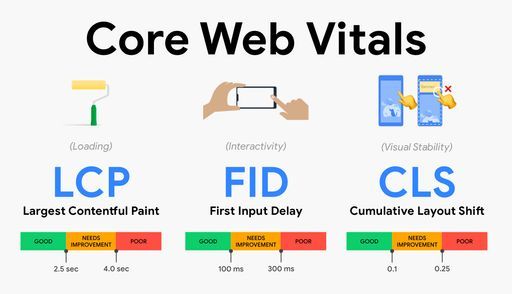
Core Web Vitals are not some complex, black-box SEO trick. They are simple, measurable signals of a good user experience. Google measures three things to see if your site is a pleasant place to be:
- Largest Contentful Paint (LCP): How fast does the main content on your page load? (Is it fast, or are users staring at a blank screen?)
- Interaction to Next Paint (INP): How responsive is your site? (When a user clicks a button or link, does it happen instantly, or does it lag?)
- Cumulative Layout Shift (CLS): Is your page visually stable? (Do things suddenly jump around as the page loads, making users click the wrong thing?)
Think of it like this: Google is a restaurant reviewer. For years, they only cared about how many dishes you had on the menu (content). Now, they also care if the food is cold (LCP), if the waiter takes forever to take your order (INP), and if the table wobbles so much you spill your drink (CLS).
The "Unfair Advantage" Explained
Here’s the magic. Big, complex websites are often TERRIBLE at Core Web Vitals.
You can read more about Vodafone Proof here.
Why?
- They are bloated with tracking scripts, ad tags, pop-ups, and complex plugins.
- They use huge, unoptimized images and videos.
- Their code is a tangled mess built over a decade.
- They rely on slow, shared hosting to save millions.
Their size is their weakness.
Your small business website? It’s probably lean, simple, and fast. Or at least, it can be. You don’t have 20 marketing tools slowing it down. You don’t have a legacy system from 2010.
This is your unfair advantage.
Google’s goal is to send users to pages that load fast and work perfectly. If your 5-page website is lightning-fast (great LCP, INP, and CLS) and the corporate giant’s 5,000-page website is a sluggish mess, Google will rank you higher. Period.
You can win not by being bigger, but by being better.
How to Claim Your Advantage (The Smart SEO Angle)

Forget the content treadmill for a moment. Focus on this first. This is your 80/20 play.
-
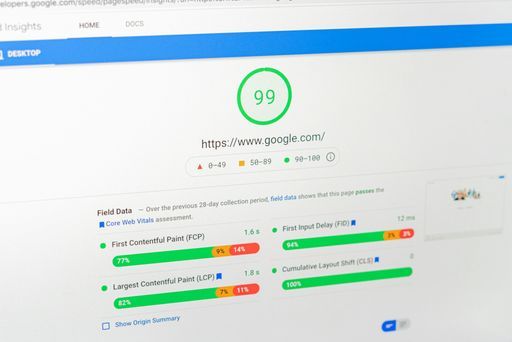
Measure, Don't Guess: Go to PageSpeed Insights (it's free from Google). Type in your URL. It will give you a score for your Core Web Vitals and, most importantly, tell you exactly what to fix.
-
Fix the Low-Hanging Fruit (The 80% Win):
- Images: Non-compressed images are the #1 culprit. Make sure that every image is compressed before you upload it. Convert images to modern formats like WebP, Avif even better. This alone can slash your LCP.
- Lazy Load: Images and videos below the fold should only load as the user scrolls down. Most modern website agencies will do this automatically.
- Opt for Quality Hosting: Abandon the $3/month shared hosting option. This is the most overlooked aspect with considerable importance. It represents the highest return on investment in the realm of SEO. A quality managed hosting provider can dramatically improve your LCP and INP by serving your site faster. CDN services will also help deliver content quickly worldwide.
- Reduced JavaScript: Each script integrated (such as chat widgets, analytics, and advertisements) can hinder website's performance. The best approach is to eliminate any non-essential elements. Unfortunalely, many website builders and CMS platforms tend to add unnecessary scripts by default. NextJS is a negative modern example, while results from WordPress shows how it should not be executed.
- Kill Annoying Pop-ups: That pop-up that covers the screen and makes you hunt for the "X"? It’s killing your CLS and user experience. Use a less intrusive banner instead.
You don't need a developer for most of this. These are foundational fixes that make your site fundamentally better for both users and Google.
Stop Playing Their Game. Start Playing Yours.
Unsplash © Justin Morgan
The race to the top of Google isn't a marathon of content creation. It's a sprint for a better experience.
By focusing obsessively on nailing your Core Web Vitals, you’re not just "doing SEO." You’re fundamentally improving your business asset. A faster, smoother site converts more visitors into customers anyway. The higher ranking is just the bonus.
So stop trying to be a bigger version of your competitor. Be a better version of yourself. Fix your foundation. Claim your unfair advantage. The giants are slow and clumsy. You're small and nimble. It's time to use that to your advantage.