The 2026 Web Renaissance

Unsplash © Moritz Knöringer
Escaping the Bloat with Pure Server-Side Rendering
As we settle into 2026, the web development landscape has undergone a seismic shift. The frantic race to adopt ever-more complex JavaScript ecosystems has cooled, replaced by a sobering realization: performance and security are the only currencies that matter. The industry is witnessing a mass migration away from the bloated monoliths of the early 2020s—specifically the heavy abstraction layers of frameworks like Next.js and the antiquated, plugin-riddled architecture of WordPress. The new king of the hill is not a specific tool, but a philosophy: optimized Server-Side Rendering (SSR).
The catalyst for this revolution wasn't a desire for minimalism for its own sake; it was the merciless enforcement of Google’s Core Web Vitals. By 2026, ignoring these metrics is a death sentence for organic traffic. The dominant metrics—Largest Contentful Paint (LCP), Interaction to Next Paint (INP), and Cumulative Layout Shift (CLS)—have effectively killed the "build first, optimize later" mentality.
The Metric That Changed Everything: LCP
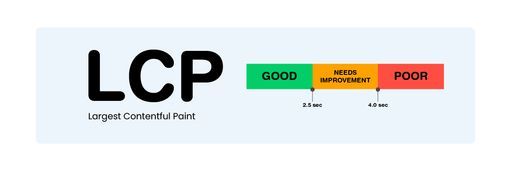
Largest Contentful Paint (LCP) fundamentally altered how we view "loading." In the past, developers hid behind loading spinners and splash screens, assuming the job was done once the initial JavaScript payload fired. LCP destroyed that illusion. It focuses strictly on when the main content becomes visually available to the user.
Slow LCP times (north of 4 seconds) decimate search rankings and decimate user retention. This metric single-handedly drove the nail in the coffin of traditional Client-Side Rendering (CSR) for content-heavy sites. Sending a massive bundle of JavaScript to a user's phone and asking them to build the DOM locally became an unacceptable practice. The server had to take back control.
Beyond the First Click: The Rise of INP
For years, First Input Delay (FID) was the standard for responsiveness. However, FID was flawed because it only measured the very first interaction. Modern web architectures load JavaScript in dynamic chunks, meaning a site might feel fast initially but freeze up three clicks later when a new feature loads.

Enter Interaction to Next Paint (INP). INP measures responsiveness throughout the entire user lifecycle. This metric exposed the dirty secret of heavy frameworks: their unpredictable, chunk-based loading creates a jittery, unstable experience. By 2026, the only way to reliably pass INP at scale is to reduce the dependency on client-side JavaScript for critical interactions, pushing logic back to the server.
Visual Stability and the Vodafone Proof
The final piece of the puzzle is Cumulative Layout Shift (CLS). This metric quantifies the frustration of a moving interface—buttons jumping under thumbs, text reflowing as ads load, and images pushing content down. It destroys trust.

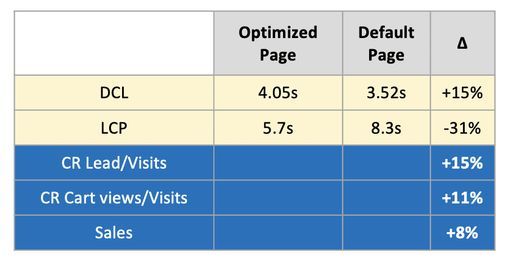
The business impact of prioritizing these metrics is undeniable, proven by the practical case study of Vodafone Italy. By focusing on server-rendering critical HTML, reducing render-blocking JavaScript, and optimizing key assets (specifically hero images), they improved their LCP by 31%. This technical win translated directly into an 8% increase in sales. This was the wake-up call the industry needed. Optimization isn't just about pleasing Google's algorithms; it is direct revenue generation.
The Security and Architecture Pivot
The shift back to the server is not just about speed; it is about security. The mid-2020s saw a rise in vulnerabilities stemming from the sprawling Node.js package ecosystem. The reliance on thousands of transient dependencies—the foundation of many complex meta-frameworks—became a liability too great to ignore.
In 2026, the "modern" stack looks surprisingly retro, but with a twist. Developers have largely abandoned the "kitchen sink" approach of WordPress, which required bloat-removal plugins just to function decently. They have also stepped away from the opaque complexity of heavy meta-frameworks like Next.js, which often introduced more overhead than they solved.
Instead, two dominant architectural trends have emerged:
- For most applications, developers are returning to simple server-rendered sites. They use minimal freameworks like Qwik.js to add interactivity directly in the HTML. This approach eliminates the massive hydration costs of frameworks and keeps the stack shallow, secure, and blazing fast.
- Disciplined Meta-Frameworks: For highly complex applications, SSR is still used, but it is combined with so called "resumability". No longer is the entire page hydrated with JavaScript immediately on the first load; only the specific components requiring interactivity are touched, preserving the pristine LCP and INP scores of the static content.
Server-first approaches—especially those that reduce runtime JavaScript—shrink the attack surface by default. In a regulatory environment increasingly hostile to avoidable breaches, this matters.
Principles for the 2026 Developer

iStock © 1214543291
To survive in this new landscape, developers adhere to a strict code of conduct derived from the hard lessons of the previous decade:
- Reserve Space: Every image and embed must have explicit dimensions or aspect ratio boxes defined in CSS. Zero CLS tolerance is the standard.
- Layout Discipline: Content is never injected above existing content unless triggered by a specific user interaction. No more surprise pop-ups that shove the "Buy" button off the screen.
- Font Management: Fonts are preloaded to prevent the "flash of unstyled text" (FOUT) and the layout shifts associated with font swapping.
- The Progressive Spirit: Just as early browsers like Netscape used progressive JPEGs to improve perceived speed, modern stacks prioritize the perception of performance. The goal is to serve the critical HTML first, ensuring the user sees something meaningful immediately, rather than a blank white screen.
Conclusion: A New Dawn for the Web
The web development environment of 2026 is leaner, faster, and safer. The industry has recognized that the bloat of WordPress and the increased complexity of heavy frameworks were evolutionary dead ends. The future belongs to Server-Side Rendering—powered by minimal JavaScript and a rigorous adherence to Core Web Vitals. We have returned to the fundamentals: the server does the heavy lifting, and the browser simply displays the result. It is a web that works for everyone, on any device, instantly.